
A must-read for designers, easily close the pit and get high-precision bending process
1.Core Bending Parameters- A Must-Read for Design!
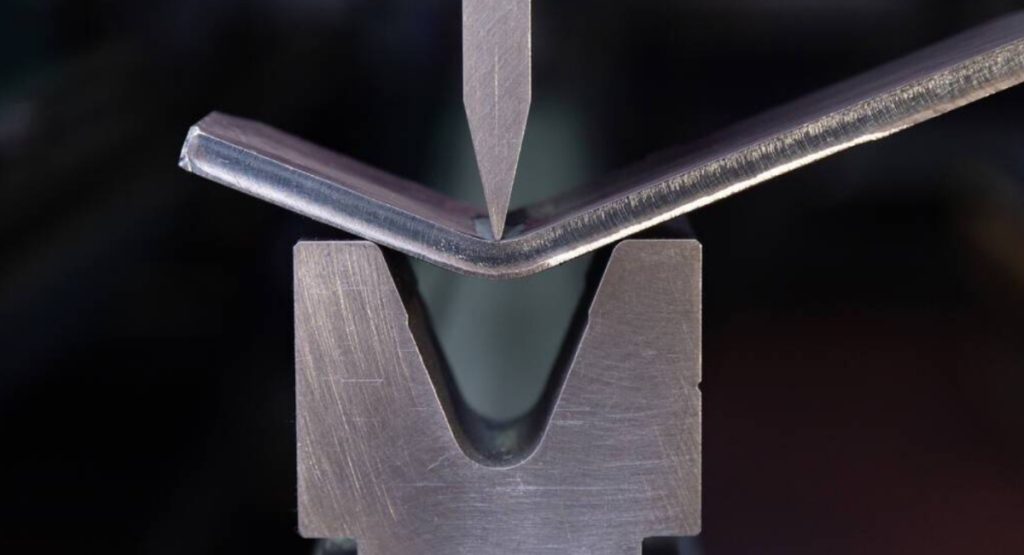
1️⃣ Bend Radius R
- The inner radius should not be smaller than the plate thickness (T)!
- Too small a radius can easily crack (especially for aluminum and stainless steel).
- Recommended: R ≥ T (e.g., for a 1.5mm plate thickness, R should be at least 1.5mm).
2️⃣ Bend Angle
- Conventional angle: 90° is the most stable; non-90° angles require special molds.
- Accuracy tolerance: ±1° is a common industry standard.
3️⃣ Bend Coefficient and Deduction Value
- Calculate the unfolded dimensions accurately during design!
- The K factor (neutral layer coefficient) is critical, generally set between 0.3-0.5.
Tip: Ask the manufacturer for a material coefficient table to avoid dimensional errors!
2.. Design Pitfall Avoidance Guide (A Tears of Pain Summary!)
❌ Pitfall 1: Holes/Slots Too Close to the Bend Line
? Consequence: Holes will deform and pull during bending
? Solution: Hole margin ≥ 2T + R (for a 2mm thick plate, leave at least 5mm).
❌ Pitfall 2: Insufficient Bend Height
? Minimum height H > 2T + R (otherwise, the machine will not be able to hold the plate).
? Recommended: H ≥ 3mm (for plates thinner than 1.5mm).
? Minimum height H > 2T + R (otherwise, the machine will not be able to hold the plate).
? Recommended: H ≥ 3mm (for plates thinner than 1.5mm).
❌ Pitfall 3: Multiple Bend Interference
? Be aware of tool collision risks during continuous bending.
? Bending order is crucial! Simulate the bending path or consult a process engineer.
? Be aware of tool collision risks during continuous bending.
? Bending order is crucial! Simulate the bending path or consult a process engineer.
❌ Pitfall 4: Special materials not processed
? Aluminum sheets are prone to cracking, copper sheets are soft and have large springback, and stainless steel is hard and requires large tonnage.
? Mark the material in advance and allow for springback compensation (the springback angle needs to be verified through testing).
? Aluminum sheets are prone to cracking, copper sheets are soft and have large springback, and stainless steel is hard and requires large tonnage.
? Mark the material in advance and allow for springback compensation (the springback angle needs to be verified through testing).
3. Practical Tips
- First-article verification is essential before mass production!
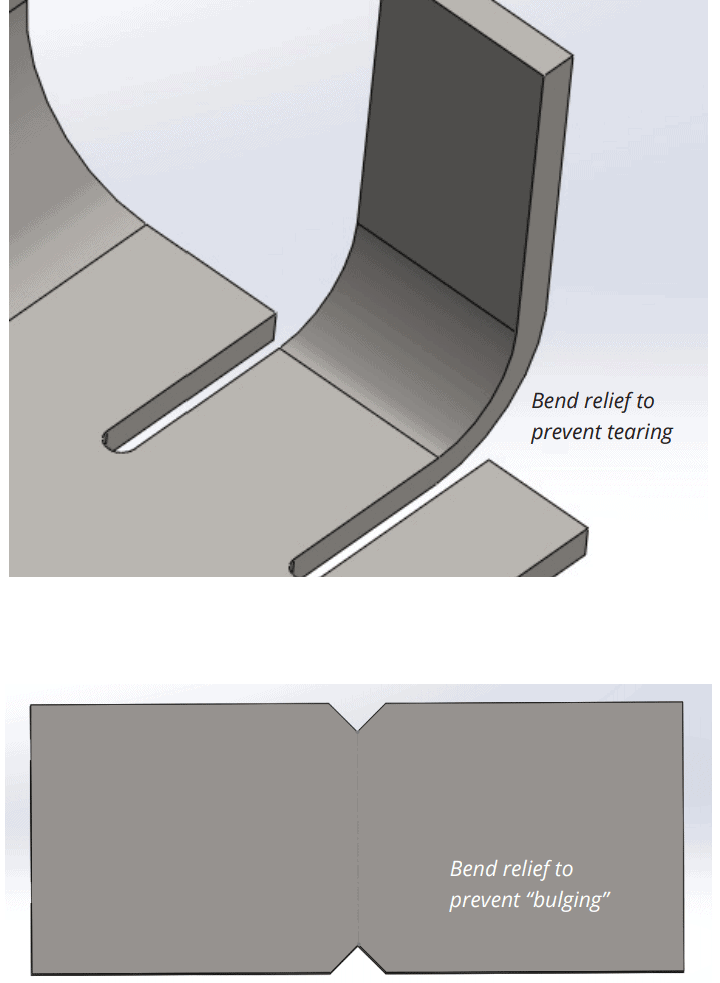
- For complex bends, add process notches to prevent tearing.
- Mark the bend direction (↑↓) to avoid reverse bending and scrap.
- Surface treatment (powder coating/electroplating) requires an allowance for the thickness of the bending coating.
Good sheet metal design = reasonable structure + process understanding + communication with the manufacturer!
The Hidden Cost Driver in Your CAD Model: How Structural Design Directly Impacts Machining Bills
Why EDM Makes Your CNC Parts More Expensive?