
FDM vs SLA 3D Printing: The Ultimate B2B Guide for Custom Manufacturing & Prototyping
1. What Is FDM 3D Printing? Industrial Pros, Cons & Use Cases
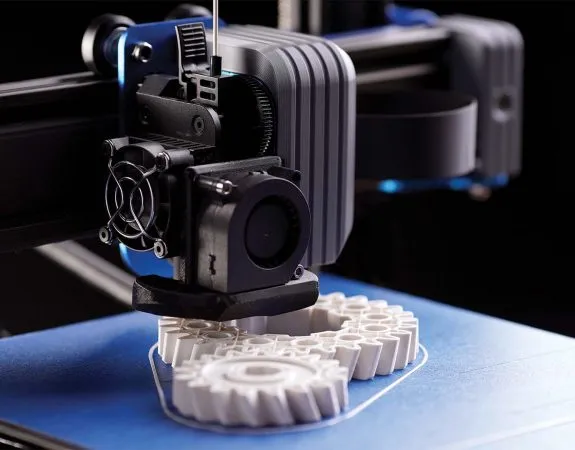
Fused Deposition Modeling (FDM) is the most widely adopted additive manufacturing technology for structural parts and rapid tooling. Thermoplastic filaments (PLA, ABS, PETG, carbon‑fiber reinforced) are melted and extruded layer by layer through a precision nozzle. Industrial FDM systems support nozzle diameters from 0.2 mm (fine details) up to 1.0 mm (large‑part build), with layer heights between 0.05 mm and 0.4 mm.
✅ FDM Advantages
- Lowest production cost per part
- High mechanical strength & impact resistance
- Large‑format capabilities (up to 1m+ build volume)
- Wide range of engineering thermoplastics
- Excellent for functional testing & jigs
⚠️ FDM Limitations
- Visible layer lines (requires post‑processing)
- Moderate dimensional accuracy (±0.1–0.3 mm)
- Not ideal for micro‑features or ultra‑smooth surfaces
- Anisotropic strength (weak along Z‑axis if not optimized)
Best for: Structural brackets, assembly fixtures, large‑scale prototypes, end‑of‑arm tooling, and low‑volume production of durable plastic parts.
2. What Is SLA 3D Printing? High‑Precision Resin Additive Manufacturing
Stereolithography (SLA) uses an ultraviolet (UV) laser to cure liquid photosensitive resin layer by layer, achieving micron‑level precision. Industrial SLA machines reach layer heights as low as 0.02 mm, delivering near‑injection‑molding surface finish with almost invisible layer lines. Materials include standard rigid resins, tough/ABS‑like, high‑temperature resistant, and clear/transparent resins.
✅ SLA Advantages
- Superior surface quality (smooth, matte/glossy)
- High dimensional accuracy (±0.02–0.05 mm)
- Perfect for intricate details, textures & complex geometries
- Wide range of specialty resins (flexible, castable, medical)
⚠️ SLA Limitations
- Higher material & production cost
- Lower mechanical toughness vs. FDM thermoplastics
- Parts can be brittle and may degrade under UV over time
- Build volume typically smaller than industrial FDM
Best for: Appearance models, consumer electronics enclosures, medical device prototypes, jewelry patterns, micro‑scale parts, and display‑grade prototypes.
3. Head‑to‑Head Comparison: FDM vs SLA 3D Printing
| Key Factor | FDM 3D Printing | SLA 3D Printing |
|---|---|---|
| Dimensional Accuracy | ±0.1 mm – ±0.3 mm | ±0.02 mm – ±0.05 mm |
| Surface Finish | Visible layer lines, textured | Glass‑smooth, matte/glossy, no visible layers |
| Material Properties | High toughness, wear resistance, ductile | High hardness & detail, but more brittle |
| Typical Materials | PLA, ABS, PETG, Nylon, PC, Carbon Fiber | Standard resin, tough resin, HT resin, clear/flexible |
| Production Cost (per part) | $ – Low to moderate | $$ – Moderate to high |
| Best Application | Functional prototypes, jigs, large parts, end‑use low‑volume | Aesthetic models, micro‑precision, medical, master patterns |
| Post‑processing effort | Support removal, sanding (higher effort) | Support removal, light sanding or washing/curing (medium) |
4. How to Choose: Decision Framework for Engineers & Buyers
Based on thousands of custom manufacturing projects, we recommend this decision logic:
- ✔ Choose FDM if: You need low‑cost functional parts, large‑scale prototypes (>300 mm), mechanical toughness, or you’re iterating many design versions on a tight budget.
- ✔ Choose SLA if: Your part demands ultra‑fine features, flawless surface appearance, tight tolerances (±0.05 mm), or you’re creating show models / master patterns for molding.
- ✔ Hybrid approach (FDM + SLA): Use FDM for early structural verification and SLA for final appearance prototypes before mass production. This shortens development cycles and controls total cost — widely adopted by our long‑term industrial partners.
For large assemblies, you can also combine both: FDM for internal structural frames, SLA for visible covers or user‑facing components.
5. Material Performance Deep Dive
FDM engineering materials (ABS, Nylon12CF, PETG) provide tensile strength up to 50–70 MPa and excellent impact resistance (Izod > 200 J/m). That’s why FDM is trusted for production tools and end‑use parts under continuous load.
SLA advanced resins (e.g., tough/ABS-like or heat‑resistant) can achieve 40–55 MPa tensile strength but with elongation at break <15%, making them unsuitable for snap‑fits or high‑flexure applications. For optical clarity and smooth touch, SLA is unbeatable.
👉 Note: Always check the technical datasheet of your specific resin or filament. Our engineering team provides free material selection advice based on your load and environment requirements.
6. Cost & Lead Time Benchmarks for Custom 3D Printing
For typical industrial parts (50x50x50 mm):
- FDM: $5–20 per part, lead time 2–4 days (incl. post‑processing).
- SLA: $20–60 per part, lead time 2–5 days (higher for intricate supports).
Volume discounts apply for batches ≥10 pieces. FDM offers significant savings on larger parts; SLA remains cost‑effective for high‑value, high‑precision small batches.
📘 Frequently Asked Questions (FAQ)
Can SLA parts be used for functional testing?
Yes — with tough or engineering-grade resins, SLA parts can withstand moderate mechanical loads. However, for high-impact or cyclic loading, FDM (ABS/PC) is generally preferred.
Which technology is better for large parts (>400 mm)?
FDM is the clear winner due to lower material cost and larger build volumes. Most industrial SLA printers are limited to ~300x300x300 mm.
Do you offer post-processing like painting or polishing?
Absolutely. We provide sanding, priming, painting, vapor smoothing (for ABS), and clear coating. SLA parts can be polished to optical clarity.
How accurate are FDM vs SLA for press-fit assemblies?
SLA (±0.02 mm) is ideal for tight tolerance assemblies. FDM (±0.15 mm typical) works for looser fits or when design compensates with clearance.
7. Why Work With a Professional 3D Printing & CNC Manufacturer?
We are an ISO‑certified manufacturing partner combining industrial FDM, SLA, and CNC machining under one roof. Over the past decade, we’ve delivered 15,000+ custom parts to automotive, medical, consumer electronics, and industrial equipment clients. Our engineering team performs:
- Design for Additive Manufacturing (DfAM) reviews
- Process & material recommendation based on your budget and performance targets
- Strict quality control (CMM inspection for critical dimensions)
- Fast turnaround: prototypes in 3 days, production batches in 7–10 days
We don’t just print parts — we help you avoid costly mistakes, reduce assembly failures, and accelerate time‑to‑market.
📩 Get a Free Technical Consultation & Custom Quote
Upload your 3D file (STL, STEP, IGES) and tell us your application — our experts will recommend the optimal process (FDM, SLA, or hybrid) and provide a competitive quote within 24 hours.
Request Free Quote →No obligation. Fast turnaround for prototypes & low‑volume production.
On-Demand Manufacturing for Small Batch Production: No MOQ, Fast Lead Times & Full Quality Control
Computer Numerical Control Lathe AS9100 Aerospace CNC Turning Service