
DLP vs SLS 3D Printing: Industrial Guide for Custom Manufacturing & Functional Parts
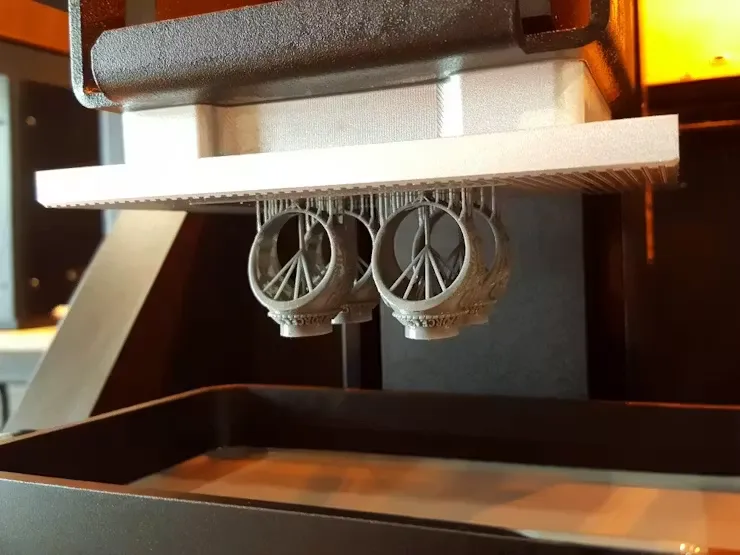
1. What Is DLP 3D Printing? High‑Precision Resin 3D Printing for Fine Details
Digital Light Processing (DLP) 3D printing cures entire layers of liquid photopolymer resin at once using a digital light projector. Unlike SLA’s point‑by‑point laser scanning, DLP delivers faster build speeds and exceptional repeatability. Industrial DLP systems achieve dimensional tolerances of ±0.01–0.02 mm and minimum layer heights down to 0.01 mm, making them ideal for ultra‑fine features, micro‑holes, and smooth surfaces without visible stepping.
✅ DLP Advantages
- Ultra‑high precision (±0.01 mm) & smooth surface finish
- Fast per‑layer curing → short lead times for small parts
- Excellent for intricate details, textures & thin walls
- Supports specialty resins: transparent, high‑temp, flexible, biocompatible
⚠️ DLP Limitations
- Build volume typically ≤ 150 mm (limited for large parts)
- Resin parts can be brittle compared to SLS nylon
- Requires washing & post‑curing
- Higher material cost per kg vs. SLS powder (but lower part volume)
Typical applications: precision electronic housings, dental models, jewellery masters, micro‑fluidic components, cosmetic prototypes, and high‑accuracy assembly test parts.
2. What Is SLS 3D Printing? Industrial Powder Sintering for Functional Batch Production
Selective Laser Sintering (SLS) uses a high‑power laser to fuse nylon powder (PA12, PA11, glass‑filled, TPU) layer by layer. The unsintered powder acts as natural support, allowing complex hollow structures, internal channels, and interlocking assemblies without any dedicated support structures. SLS parts exhibit isotropic mechanical properties — no weak layer lines — making them suitable for end‑use functional components.
✅ SLS Advantages
- No support structures → unlimited geometric complexity
- High toughness, impact resistance & durability (PA12: 45–50 MPa tensile)
- Ideal for low‑to‑medium batch production (20–1000+ parts)
- Excellent thermal & chemical resistance
⚠️ SLS Limitations
- Surface is matte and porous (requires tumbling / sanding for smooth finish)
- Longer cooling phase & post‑processing (powder removal, blasting)
- Higher machine investment, but cost‑effective per part in batches
- Not suitable for high‑gloss optical transparency
Typical applications: automotive ducts, industrial functional prototypes, wearable device structures, drone frames, jigs & fixtures, and low‑volume production of durable plastic parts.
3. Head‑to‑Head Comparison: DLP vs SLS 3D Printing
| Parameter | DLP 3D Printing | SLS 3D Printing |
|---|---|---|
| Accuracy | ±0.01 – 0.02 mm | ±0.05 – 0.10 mm |
| Surface Finish | Smooth, glossy/matte, almost no visible layers | Matte, slightly porous (post‑processing required for smoothness) |
| Typical Materials | Rigid resin, tough resin, HT resin, castable, clear | PA12, PA11, glass‑filled nylon, TPU (flexible) |
| Mechanical Properties | High hardness, fine detail but more brittle | High toughness, elongation at break > 20%, durable |
| Support Structure | Required (removed manually) | None (powder supports complex geometries) |
| Best For | Small precision parts, aesthetic models, rapid micro‑prototypes | Functional end‑use parts, complex assemblies, batch production |
| Production Cost (per part)* | $15 – $50 (small high‑detail part) | $10 – $40 (batch price, depends on volume) |
*Cost estimates based on typical industrial parts (size 30x30x30mm, medium complexity, low‑medium volume). Request a quote for precise pricing.
4. Material & Performance Deep Dive
Tensile strength: 40–65 MPa | Modulus: 2.5–4.0 GPa | HDT @0.45MPa: 50–120°C (high‑temp variant)
📊 SLS Nylon PA12
Tensile strength: 45–50 MPa | Elongation at break: 15–25% | Impact strength (Izod): 45–55 kJ/m²
SLS glass‑filled nylon (PA12-GF) increases stiffness to 5 GPa, ideal for structural frames.
While DLP delivers superior surface quality and sharp edges, SLS offers unmatched durability and fatigue resistance for moving parts or high‑wear environments. For applications requiring both fine detail and toughness, consider hybrid workflows: DLP for proof‑of‑concept aesthetics, SLS for pre‑production functional validation.
5. How to Choose Between DLP and SLS: A Practical Decision Framework
Based on our shop floor experience with global industrial clients, use these rules:
- 🔹 Choose DLP if: your part has micro‑features (<0.2 mm), demands a glossy smooth finish, needs high dimensional accuracy for assembly, or is a small‑scale visual prototype.
- 🔹 Choose SLS if: your part must endure mechanical stress, requires complex internal channels or undercuts, you produce batches of 10–500 units, or you need durable end‑use components without supports.
- 🔹 Hybrid strategy (recommended): Use DLP for early precision appearance models and ergonomic testing, then switch to SLS for functional reliability testing and small‑batch production. This reduces iteration risk and speeds up time‑to‑market.
6. Cost & Lead Time Benchmarks for Industrial Custom Manufacturing
Typical lead times (prototypes & low‑volume):
- DLP: 2–4 days (includes washing, UV curing, light polishing).
- SLS: 4–7 days (printing, cooling, powder removal, sandblasting).
For batch orders (50–200 parts), SLS lead time remains stable with significant per‑part cost reduction due to powder packing efficiency.
Cost efficiency guide: DLP is cost‑effective for high‑precision, small‑footprint parts (< 100 cm³). For medium to large functional parts or batch quantities > 20 units, SLS offers lower unit cost and better mechanical reliability.
7. Post‑Processing & Surface Treatment: What to Expect
DLP parts require support removal, isopropyl alcohol washing, and UV post‑curing. After these steps, they can be polished, painted, or coated to achieve optical transparency or metallic finishes.
SLS parts arrive matte and slightly rough. Standard post‑processing includes media tumbling, bead blasting, or vibratory finishing for smoothness. Dyeing is also available for colored functional parts.
📌 Frequently Asked Questions (FAQ)
Is DLP more accurate than SLS?
Yes, DLP typically achieves ±0.01 mm vs SLS ±0.05–0.1 mm. For press‑fit pins or micro‑vias, DLP is superior. For general engineering fits, SLS is sufficient.
Can SLS parts be used for medical or food‑contact applications?
PA12 nylon can be certified for skin contact (ISO 10993) after proper cleaning. We offer biocompatible SLS materials upon request.
Which technology is better for large batches (500+ parts)?
SLS is preferred because of no support removal, automated powder recovery, and consistent mechanical properties across the batch.
Do you offer design guidelines for DLP vs SLS?
Yes, our engineering team provides free DFAM (Design for Additive Manufacturing) analysis — we’ll help you optimize wall thickness, tolerances, and orientation for lowest cost.
8. Reliable Industrial DLP & SLS 3D Printing Services – One Stop Solution
We are an ISO 9001:2025 certified manufacturer integrating CNC machining, injection molding, and advanced 3D printing. Our industrial‑grade DLP and SLS production lines serve automotive, medical, consumer electronics, and aerospace sectors. Every project undergoes strict in‑process inspection and final dimensional report (CMM or optical scanning).
- ✅ Free process & material recommendation based on your 3D file
- ✅ Rapid prototyping (3‑5 days) and low‑medium volume manufacturing (7‑12 days)
- ✅ Full traceability & quality documentation available
- ✅ Over 10,000 successful custom parts delivered globally
🚀 Get Your Free Quote & Technical Evaluation
Send us your 3D files (STL, STEP, IGES) and project requirements. Our engineering team will recommend the optimal process — DLP, SLS, or hybrid — and provide a competitive factory price within 24 hours.
Request Custom Quote →No obligation. Samples & small batch orders welcome.
OEM Manufacturing & Contract Manufacturing: Reliable Outsourced Production with Full IP Protection
On-Demand Manufacturing for Small Batch Production: No MOQ, Fast Lead Times & Full Quality Control